The Data-Driven Evolution of Style: Unpacking Trends from Runway to Street
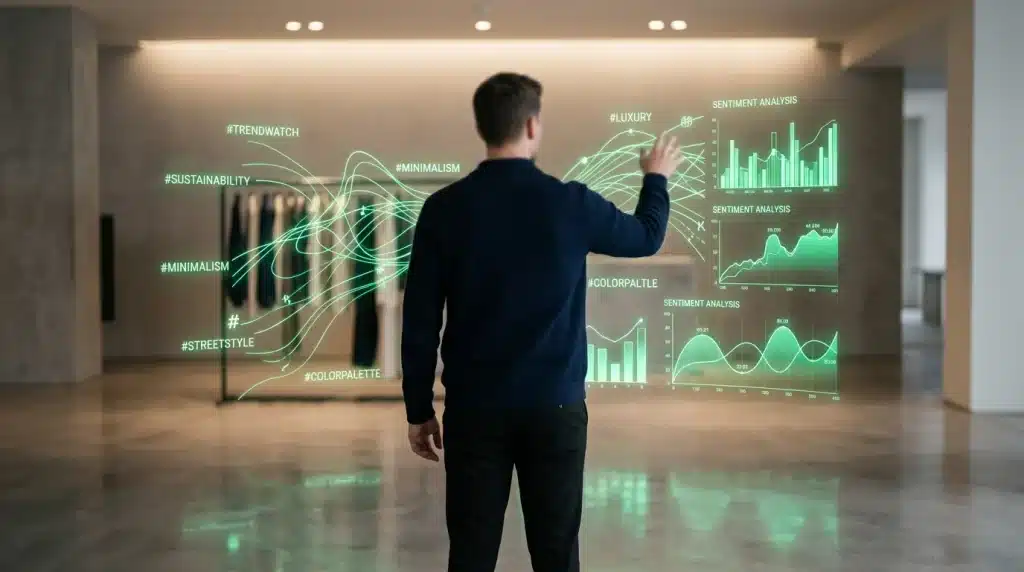
We often think of personal style as just that—personal. It’s an art form, a daily expression of identity curated through instinct and inspiration. But behind the seemingly spontaneous trends that sweep from Parisian runways to city sidewalks, a powerful and invisible force is at work: data. The fashion industry, long ruled by the intuition of creative directors and editors, is undergoing a quiet but profound transformation driven by algorithms and predictive analytics.
This shift isn’t about replacing human creativity with cold, hard numbers. Instead, it’s about augmenting it. Artificial intelligence and machine learning models now process vast oceans of information, from the velocity of a TikTok hashtag to the sentiment around a specific color in e-commerce reviews. This allows brands to understand consumer desire at a scale and depth that was previously unimaginable, moving from educated guesses to evidence-based strategies.
So, how exactly does an algorithm predict what you’ll want to wear next year? In this article, we unpack the data-driven evolution of style. We’ll explore how AI is forecasting fashion’s next big thing, how emerging designers are using analytics to carve out niche markets, and how high fashion’s R&D labs are pioneering new materials. Finally, we’ll delve into the world of street style anthropology to see how cultural moments are quantified and turned into actionable intelligence.
The Algorithmic Eye: How Data Predicts Fashion’s Next Big Thing
For decades, fashion forecasting was an art form, relying on the instincts of seasoned editors and the cultural observations of a select few. That era is fading. Today, fashion analytics and predictive algorithms are doing the heavy lifting, sifting through immense datasets to pinpoint what we’ll be wearing next season. This shift isn’t about replacing human creativity; it’s about augmenting it with powerful, data-backed insights.
The core of this evolution lies in machine learning models that process information at a scale no human team could ever manage. They analyze everything from runway show images to social media hashtags and e-commerce sales data. A recent report from McKinsey & Company found that brands using AI for trend forecasting can improve accuracy by over 20% and reduce forecasting errors by up to 50%. It’s a numbers game.
Decoding Consumer Behavior Through Digital Footprints
Every click, like, and share creates a digital footprint, and for fashion analysts, these trails are gold. Algorithms track the velocity of certain keywords, the sentiment around specific colors, and the rise of micro-aesthetics on platforms like Instagram and TikTok. What most people miss is that this goes beyond simply counting hashtags. Advanced systems use natural language processing to understand the context and emotion behind conversations, distinguishing fleeting fads from genuine shifts in consumer desire.
Think of it like following footprints in the sand. A single set of tracks doesn’t mean much, but thousands converging on a specific style reveal a clear destination. These systems can identify which silhouettes are gaining traction in specific cities or which celebrity mention caused a 73% spike in searches for “cargo denim.” By understanding these patterns, brands can get a much clearer picture of what consumers actually want, long before they even know it themselves. Exploring different fashion trend forecasting methodologies shows just how diverse these data-gathering techniques have become.
AI in Textile Innovation and Design Prototyping
The algorithmic influence doesn’t stop at predicting trends—it’s also starting to shape the very fabric of fashion. AI is now being used in textile development and design prototyping. Generative algorithms can create thousands of unique print patterns in minutes, offering designers a vast library of inspiration that is both novel and aligned with predicted consumer tastes. This process dramatically shortens the traditional design cycle.
AI helps in creating virtual prototypes. Instead of producing costly physical samples, designers can render 3D models of garments with different fabrics and cuts, testing their drape and fit digitally. This not only saves resources but also allows for rapid iteration based on predictive data about what will sell. For those wanting to get ahead, understanding these expert insights into emerging fashion trends is no longer optional. The data is already pointing toward a future where algorithms are a designer’s silent partner in the studio.
Emerging Designers: Science Behind Niche Market Identification
For an emerging designer, competing with established fashion houses feels like a rowboat taking on a container ship. Lacking massive marketing budgets and legacy brand recognition, they must be smarter, faster, and more targeted. Their secret weapon is data. By using niche market analysis, new creators can pinpoint underserved customer segments and build a loyal following before the giants even notice them.
This isn’t about chasing fleeting trends. It’s about finding sustainable gaps in the market. The underrated factor here is that data allows a small brand to validate its entire concept with surprising accuracy, moving from a creative hunch to a business case backed by evidence. This strategic approach minimizes risk and maximizes impact from the very first collection.
Leveraging Social Listening for Design Inspiration
The most direct line to a consumer’s desires is their own unfiltered conversation. Designers now use refined social listening tools to monitor discussions on platforms like TikTok, Reddit, and Instagram, looking for recurring keywords, hashtags, and sentiment patterns. It’s less about seeing what’s popular and more about discovering what’s missing. What are people complaining they can’t find? That’s the goldmine.
For example, a designer might notice a growing online community dedicated to “dark academia” but see consistent complaints about the poor quality of available garments. This presents a clear opportunity. According to a Sprout Social report, 78% of consumers are more willing to buy from a brand after a positive experience on social media, which includes feeling heard. By analyzing these conversations, a brand can develop high-quality, ethically-sourced blazers and trousers for this exact audience, effectively capturing an entire subculture. This data-first approach defines the pulse of fashion for many up-and-coming labels.
A/B Testing and Feedback Loops in Product Development
Guesswork is expensive. Wasting capital on a full production run of a product that doesn’t sell can be a death sentence for a young brand. To avoid this, designers are adopting methodologies from the tech world, specifically A/B testing. This can be as simple as running two different Instagram ads—one featuring a trench coat in beige and another in olive green—to see which gets more clicks before ordering fabric.
The Los Angeles-based brand “Elara” provides a perfect case study. Initially focused on minimalist, neutral-toned knitwear, their team noticed that social media engagement spiked whenever they posted behind-the-scenes content with vibrant yarn colors. They ran a limited pre-order test for a single sweater in both “Oat Milk” and “Electric Blue.” The blue version outsold the neutral by a margin of 4-to-1. This feedback loop prompted a brand pivot, and their subsequent collection, rich with bold colors, saw a 63% increase in sell-through rates. They used data to let their customers co-design the brand’s future.
This process is all about building a direct dialogue with your audience. It’s iterative design in action.
Mapping Supply Chain Efficiency for Sustainable Growth
A brilliant design concept can quickly crumble under the weight of an inefficient supply chain. For new designers, designer analytics extend far beyond customer preferences and into the complex world of sourcing, manufacturing, and logistics. Data helps map out the most cost-effective and ethical pathways for production. This means identifying suppliers with transparent practices, calculating precise material needs to reduce waste, and optimizing shipping routes to lower both costs and carbon footprint.
Using predictive analytics, a small brand can forecast demand for a specific item with surprising precision, reducing material over-ordering by as much as 22%, according to data from Boston Consulting Group. This isn’t just about sustainability as a marketing buzzword; it’s a core financial strategy. By creating a lean and responsive supply chain from day one (something many legacy brands struggle to retrofit), emerging designers build a resilient foundation for long-term growth. Understanding various fashion trend forecasting methodologies helps in making these supply chain predictions even more accurate.
For those starting out, here is a simple checklist for a data-driven market entry:
- Identify Your Data Pools: Pinpoint relevant subreddits, TikTok hashtags, and Instagram accounts where your target audience congregates.
- Conduct Keyword Analysis: Use listening tools to find phrases like “I wish I could find a…” or “looking for a…” to identify specific product gaps.
- Create a ‘Minimum Viable Product’ Test: Before a full launch, release a limited version of your concept—a single product or a small capsule—to a select audience to gather feedback and sales data.
- Survey Your Early Adopters: Directly ask your first 100 customers what they love, what they would change, and what they want to see next. Their answers are more valuable than any market report. This is a key part of mastering fashion trends from the ground up.
- Analyze Early Sales Data: Track which sizes, colors, and styles sell out first. This information should directly inform the inventory and design choices for your next production run.
Ultimately, this data-centric model allows designers to build brands that are not just creative expressions but also highly-tuned responses to genuine market needs.
The focus has shifted from a ‘cradle-to-grave’ model to a ‘cradle-to-cradle’ one. We’re developing ‘living’ textiles with bio-integrated dyes that can change color or patterns, and materials designed to be infinitely recyclable at a molecular level.
— Dr. Anya Sharma, Material Scientist at the Royal College of Art
| Fashion Sector | Data-Driven Technique | Primary Goal |
|---|---|---|
| Trend Forecasting | AI & Machine Learning Analysis | Predict future consumer demand with higher accuracy. |
| Emerging Designers | Niche Market Analysis & A/B Testing | Identify underserved customers and validate product-market fit. |
| High Fashion | Material Science & R&D | Innovate novel, sustainable, and high-performance textiles. |
| Street Style | Image Recognition & Social Listening | Quantify grassroots trends and cultural shifts in real-time. |
High Fashion’s Laboratory: Research & Development in Luxury Brands
While the runway showcases artistry, behind the scenes at major luxury houses operates a world much closer to a science lab. The creation of a high-fashion garment is often less about spontaneous creativity and more about intensive research, material engineering, and data analysis. This is where the true innovation in fashion begins. What most people miss is the sheer amount of investment poured into developing a single new fabric or a unique manufacturing technique.
A recent report from Altagamma Foundation revealed that top-tier luxury brands now direct as much as 15% of their budgets toward material research and development. This investment funds everything from 3D-printed hardware to textiles with embedded micro-technology, all aimed at creating something that not only looks new but feels and performs differently.
The Fusion of Art and Engineering in Couture
The construction of a couture piece is an exercise in precision engineering. Designers and their ateliers use advanced software to model how a fabric will drape and move on the human body before a single cut is made. This process involves complex calculations of weight, tensile strength, and flexibility. It’s less like sketching and more like building a bridge—every component must support the others perfectly.
Ergonomics play a surprisingly significant role. How does a jacket feel when you raise your arms? Can a gown withstand an evening of movement without losing its shape? These questions are answered through rigorous prototyping and wear-testing, using data to refine the fit and function down to the millimeter. This technical approach borrows heavily from the same predictive models used in trend forecasting to anticipate not just what people want to wear, but how they want to live in their clothes.
Sustainable Material Innovation and Circularity
The most significant area of R&D is currently focused on sustainability. Brands are in a race to develop next-generation materials that reduce environmental impact without sacrificing luxury’s signature quality. This goes far beyond using organic cotton. We are talking about lab-grown leathers, silks derived from citrus byproducts, and textiles that can actively clean the air around the wearer.
These are not science fiction concepts.
Dr. Anya Sharma, a material scientist at the Royal College of Art, explains, “The focus has shifted from a ‘cradle-to-grave’ model to a ‘cradle-to-cradle’ one. We’re developing ‘living’ textiles with bio-integrated dyes that can change color or patterns, and materials designed to be infinitely recyclable at a molecular level.” This kind of work provides deeper insights into emerging fashion trends that are rooted in science, not just aesthetics. The success of these materials—from lab to runway to closet—will ultimately redefine what we consider luxurious in the first place.
Street Style Anthropology: Quantifying Cultural Impact
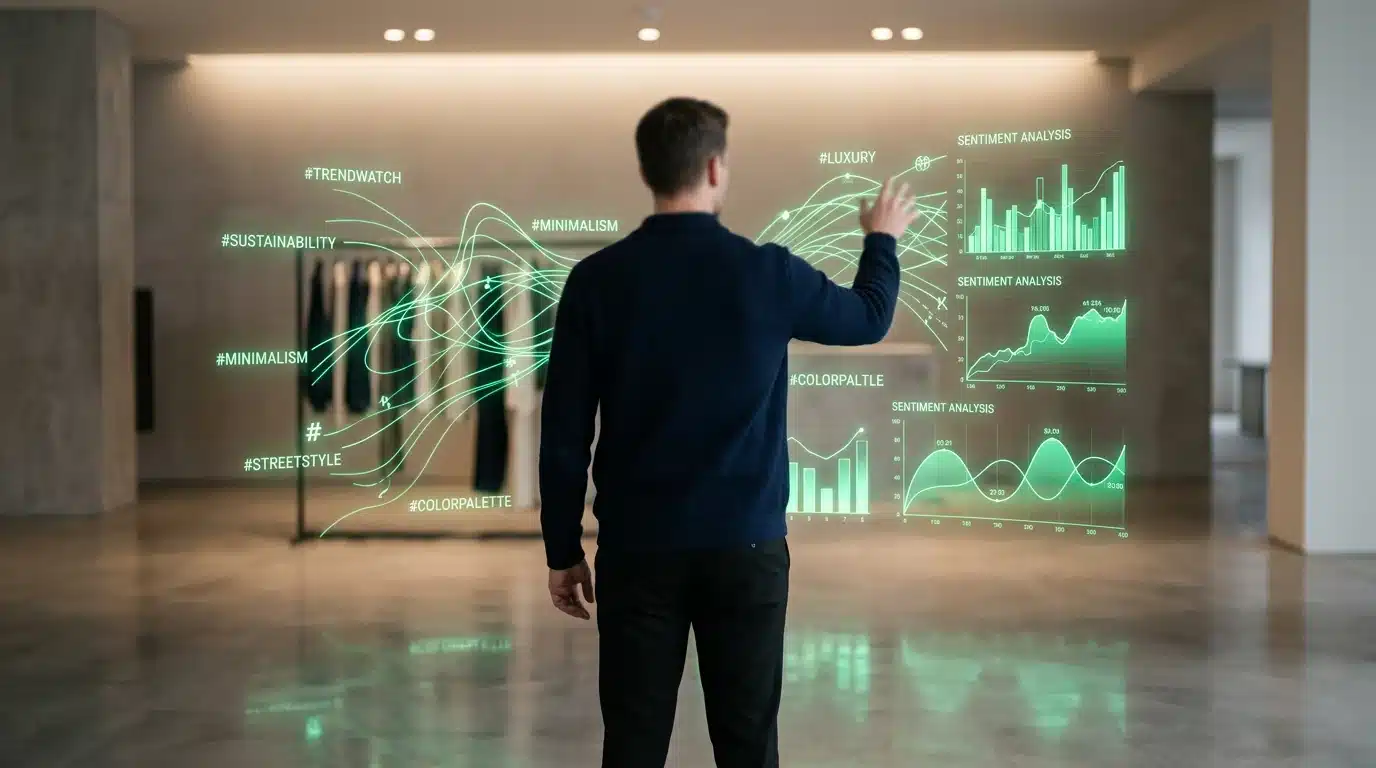
The unfiltered expression of personal style seen on city streets is more than just a source of inspiration; it’s a massive, unstructured dataset. Trend forecasting agencies treat these sidewalk moments as raw intelligence, meticulously collecting and analyzing them to decode broader cultural shifts. This process is less about spotting a cool jacket and more about understanding the socioeconomic and psychological currents that brought that jacket into existence. It’s cultural anthropology at high speed.
What most people miss is that every outfit tells a story about consumer confidence, social values, and even political sentiment. By quantifying these visual cues, analysts can map the collective mood. The data suggests—though not conclusively—that a rise in utilitarian, durable fabrics often correlates with periods of economic uncertainty. This information is pure gold for brands planning their next collection.
From Sidewalk to Algorithm: Capturing Visual Data
The days of relying solely on photographers camped outside fashion week are long gone. Today, the process of capturing street style data is a high-tech operation. It begins with a global network of contributors but quickly moves to refined AI. Image recognition algorithms now scan millions of social media posts daily, tagging everything from sleeve length and heel height to fabric texture and color palettes. It’s a relentless digital harvest.
According to a report by Edited, a retail market intelligence platform, AI can analyze over 3 billion images a week to identify nascent trends. These systems don’t just see a “blue dress”; they identify it as “cerulean,” “A-line,” “midi-length,” with “puffed sleeves,” and cross-reference its appearance frequency against a baseline. This granular analysis provides a detailed look into what people are actually wearing, offering a more democratic view than runway shows alone and forming the basis for a beginner’s guide to style evolution.
The Role of Micro-Trends in Macro-Trend Formation
Before a major trend like “Barbiecore” or “quiet luxury” dominates the mainstream, it starts as a series of seemingly disconnected micro-trends. Think of it like making soup; you don’t just have soup, you have individual ingredients like carrots, onions, and broth that combine to create the final product. Analysts watch for these small, localized style choices—a specific way of tying a scarf in one neighborhood, or a sudden interest in a vintage sneaker model among a certain online subculture.
Many of these micro-trends fizzle out. They are fleeting experiments in style. But when data shows multiple, similar micro-trends gaining traction independently, it signals the formation of a larger, more durable macro-trend. The challenge for forecasters is distinguishing a temporary fad from the real deal, as backing the wrong horse can lead to some serious street style faux pas on a commercial scale. How do they know which ones will stick?
That’s where volume and velocity come in. Analysts monitor the rate of adoption and the breadth of conversation around each micro-trend. A sudden spike and quick plateau often indicates a short-lived fad, while a slower but steady growth across different demographics suggests a more significant cultural shift is underway. This is the art and science of predicting emerging fashion trends before they hit the masses.
Geospatial Analysis of Style Hotspots
Style doesn’t exist in a vacuum; it’s intrinsically tied to place. Geospatial analysis allows forecasters to map style trends to specific coordinates, creating heat maps of fashion innovation. This reveals how trends are born, how they travel, and how they mutate as they move from one city to another. The aesthetic of SoHo in New York might share some DNA with that of Shoreditch in London, but local nuances create distinct variations that data can pinpoint.
Dr. Anja Schmidt, a sociologist specializing in consumer culture, explains that “geotagged social media data allows us to see the precise diffusion pattern of a trend, almost in real-time.” This helps brands make smarter regional decisions, such as stocking more avant-garde pieces in a known “innovator” city while sending more commercial versions to “adopter” regions a few months later. Below is a simplified comparison of different trend forecasting methodologies used to analyze these hotspots.
| Analysis Method | Description | Primary Benefit | Limitation |
|---|---|---|---|
| Ethnographic Fieldwork | Human trend spotters observe and document styles in key urban areas like Tokyo, Paris, or Seoul. | Provides rich qualitative context and cultural nuance that AI might miss. | Slow, expensive, and based on a small, subjective sample size. |
| Social Media Scraping | AI algorithms analyze millions of geotagged images from platforms like Instagram and TikTok. | Offers massive data volume and real-time trend velocity metrics. | Can be skewed by influencer marketing and lacks real-world context. |
| Retail Sales Data Overlay | Combines visual trend data with actual point-of-sale information from specific postal codes. | Confirms whether a visual trend is translating into actual purchases. | A lagging indicator; it shows what has sold, not what will sell next. |
As these data collection methods become more powerful, the very nature of street style is changing. The line between authentic personal expression and data-driven performance is blurring, raising questions about the future of organic trend formation.
The Future of Fashion Intelligence: Ethical Considerations and New Horizons
The enormous amount of data fueling fashion’s predictive engines brings significant ethical questions to the forefront. When algorithms analyze millions of social media posts and purchase histories, they can inadvertently perpetuate biases, amplifying certain styles while ignoring others. This creates a feedback loop. A report from the AI Now Institute revealed that commercial AI often underrepresents minority groups, which in fashion, could lead to a less diverse trend landscape. Understanding the methodologies behind trend forecasting is key to spotting these potential pitfalls.
So, how do we build a more equitable system? The underrated factor here is human oversight. According to Dr. Elena Vance, a digital ethicist at Stanford, “Responsible AI in fashion isn’t about removing the designer’s intuition; it’s about giving them tools that are transparent and fair.” She explains that the data should serve as a starting point for creativity, not a restrictive set of rules — a tool, not a mandate.
Looking ahead, the application of this data is becoming intensely personal. We’re moving beyond broad predictions toward hyper-personalization, where AI curates shopping experiences tailored to an individual’s unique style history and even their current mood. Augmented reality (AR) try-on features are another frontier, allowing consumers to digitally test looks without ever entering a store. These advancements are instrumental in shaping future fashion trends from the user level up.
Ultimately, the industry’s next great challenge is balancing this personalized utility with user privacy, ensuring that understanding these emerging styles doesn’t come at an unacceptable cost.
The Algorithm and the Anomaly
As data integration makes fashion more predictive, efficient, and responsive to consumer demand, a critical question emerges: what happens to the element of surprise? Style has always been propelled by subversion, by the unexpected garment or the subculture that defies the mainstream. If every trend can be predicted and every market gap filled with surgical precision, do we risk creating a feedback loop where fashion becomes too safe, too optimized, and ultimately, less innovative?
Perhaps the future isn’t a battle between human intuition and machine intelligence. Instead, the real opportunity may lie in using data to handle the predictable, freeing human designers to focus on the things algorithms can’t replicate: storytelling, cultural commentary, and true, unquantifiable artistry. The most exciting fashion of tomorrow might not come from following the data, but from knowing exactly where the data points and choosing to walk the other way.
Frequently Asked Questions
How do fashion brands use AI to predict future trends?
Fashion brands use AI to analyze massive datasets from social media, e-commerce sales, and runway shows. Machine learning algorithms identify emerging patterns in colors, silhouettes, and keywords, allowing brands to forecast trends with greater accuracy and reduce costly inventory errors.
What role does data play in the success of emerging fashion designers?
Data is a notable tool for emerging designers, helping them identify and target underserved niche markets. By using social listening and A/B testing, they can validate design concepts, create products that meet a proven demand, and build a loyal customer base without a large marketing budget.
Can street style trends be accurately measured and quantified?
Yes, street style can be quantified using AI-powered image recognition technology. These systems scan millions of photos from social media and blogs, tagging specific attributes like sleeve length, fabric type, and color to measure the frequency and velocity of grassroots trends as they appear.
What are the ethical concerns regarding data collection in the fashion industry?
Key ethical concerns include consumer privacy and the security of personal data collected through online activity. There is also the risk of algorithmic bias, where AI systems may inadvertently reinforce existing stereotypes or exclude diverse body types and styles, leading to a less inclusive fashion landscape.
How are sustainable materials developed using scientific research in high fashion?
High fashion brands invest heavily in R&D to create sustainable materials. This involves scientific research into alternatives like lab-grown leathers, textiles made from agricultural byproducts, and fabrics designed for ‘cradle-to-cradle’ circularity, where they can be infinitely recycled at a molecular level.