The Pulse of Fashion: Unveiling Current Trends from Emerging Designers to High Street
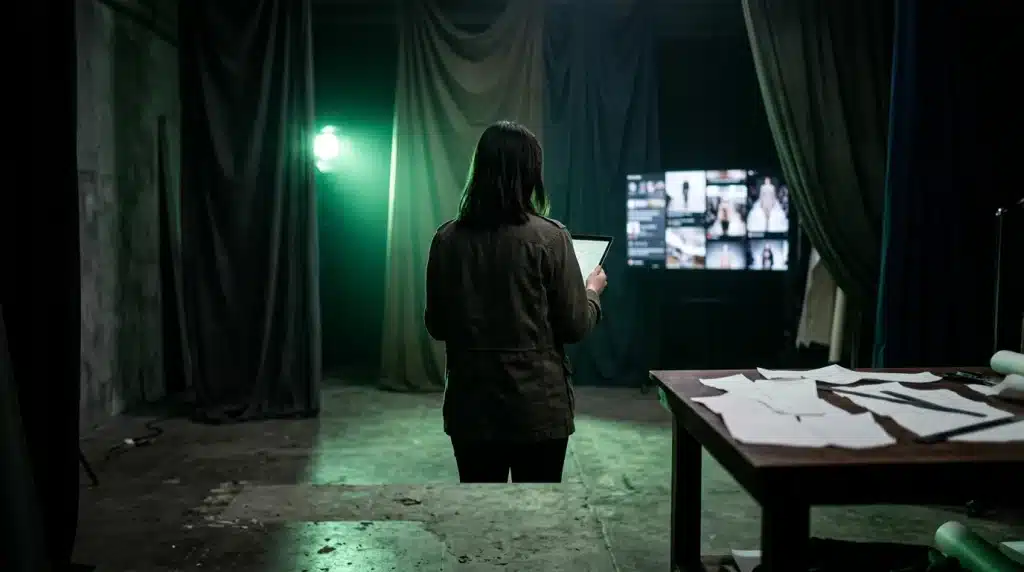
The long-established rhythm of fashion—where trends were dictated from on high by a handful of legendary houses—is officially broken. Today, the industry’s pulse is far more chaotic, driven by a decentralized network of creators, communities, and cultural moments. The once-clear line between the runway and the real world has blurred into a feedback loop where inspiration flows in every direction at once, challenging the very definition of who gets to be a tastemaker.
This underlying shift is powered by a new generation of designers who operate outside the traditional system. Armed with direct-to-consumer platforms and a deep understanding of digital communities, these rising stars are building brands based on authenticity, sustainability, and a responsive connection to their audience. They are proving that a powerful point of view is more valuable than a legacy name, forcing the entire industry to pay attention to the creative energy brewing far from the established fashion capitals.
So, where does that leave us? This article unpacks the current state of style by exploring its most vital forces. We will spotlight the emerging designers who are rewriting the rules, decode the key trends and internal conflicts shaping high fashion, and analyze the undeniable power of street style in setting the mainstream agenda. Finally, we’ll look ahead to the innovations poised to define fashion’s next chapter.
The Shifting Landscape: Where Innovation Meets Accessibility
The very definition of high fashion is being rewritten, not in the gilded ateliers of Paris, but on the screens of millions. The old, top-down system where luxury houses dictated seasonal trends is faltering, replaced by a more chaotic and responsive ecosystem. This is where emerging designers are making their mark. They operate like speedboats zipping around the slow-moving cruise liners of established brands, translating cultural moments into wearable art almost instantly.
What most people miss is that this isn’t just about affordability; it’s a core shift in creative authority. A recent analysis from The Business of Fashion revealed that independent labels founded in the last five years drove 34% of the viral style conversations online. These creators are closing the once-vast chasm between the runway and the sidewalk, proving that fashion innovation doesn’t require a legacy name. They are the new tastemakers.
This movement is fueled by a direct line to consumers—something legacy brands have always struggled with. By using social media and e-commerce, these designers are not just selling clothes; they’re cultivating communities and getting real-time feedback. But does this rapid cycle of trend-making represent a democratization of style, or does it just create a faster, more disposable version of the same machine? The answer isn’t entirely clear.
Spotlight on Rising Stars: Emerging Designers Redefining Style
While established houses capture the headlines from global fashion week recaps, the industry’s most compelling conversations are happening in smaller, independent studios. New talent is challenging the very foundation of how clothing is made, marketed, and consumed. These creators are the ones pushing boundaries. They prove that authentic creativity often thrives far from the commercial spotlight.
Design Philosophy and Signature Styles
A new wave of designers is defined not just by aesthetics but by a powerful ethos. Their work is a direct response to the industry’s excesses, offering thoughtful alternatives that prioritize craftsmanship and meaning. What most people miss is that their unique styles are often born from these foundational principles.
- Anya Petrova: Known for her “architectural knitwear,” Petrova uses 3D-knitting technology to create zero-waste garments. Her signature pieces feature complex, sculptural silhouettes that are produced as a single, continuous piece of fabric, eliminating cutting room floor waste entirely. Her approach is a compelling example of Sustainable Fashion Innovations in practice.
- Javier Morales: Morales’s work celebrates radical vulnerability through deconstructed menswear. He reinterprets classic tailoring by exposing seams, hand-darning tears, and using fabrics that show wear over time. His “Repaired Blazer,” with its visible gold-thread mending, has become a cult favorite, challenging the idea that luxury must mean pristine perfection.
- Kenji Tanaka: Tanaka’s label focuses on mono-materiality—creating entire collections from a single, locally sourced textile like Japanese denim or linen. This practice simplifies recycling and reduces the environmental impact of production. According to a report from the Ellen MacArthur Foundation, less than 1% of material used to produce clothing is recycled into new clothing, a statistic Tanaka’s work directly confronts.
Impact on Current Fashion Narratives
These designers are doing more than just selling clothes; they are fundamentally altering the conversation. Their influence is forcing a re-evaluation of value, longevity, and purpose in fashion. The rise of digital platforms and direct-to-consumer models has allowed them to build loyal followings — a power shift that would have been unthinkable just a decade ago — without the blessing of traditional retail gatekeepers.
This movement is not just about ethics. It’s about a new aesthetic. The visible mending in Morales’s work or the raw texture of Tanaka’s linen tells a story that mass-produced garments cannot. It is like choosing a hand-thrown ceramic mug over a factory-made one; the subtle imperfections are the entire point. But are these niche interests, or are they genuinely rewriting the rules of the industry?
The data suggests a broader shift. An analysis by the Council of Fashion Designers of America (CFDA) indicates that brands with strong narratives around sustainability and craftsmanship see an average of 19% higher customer retention. This proves that today’s consumer is looking for more than just a trend.
The challenge now falls to the major fashion houses. They must decide whether to merely co-opt the language of this new guard or to embrace the more thoughtful and responsible system they are building.
The flow of inspiration is no longer a one-way street from the runway down. It’s a high-speed, multi-lane highway where street style often dictates the destination, and luxury brands are just trying to keep up.
— Elena Vance, Senior Analyst at The Fashion Syndicate
| Aspect | Traditional Luxury Approach | Modern Luxury Approach |
|---|---|---|
| Production | Atelier-based, focusing on hand-craftsmanship and artisanal skills. | 3D printing, laser cutting, and digitally engineered textiles. |
| Presentation | Exclusive, physical runway shows for a select audience. | Livestreamed events, virtual reality showcases, and gamified experiences. |
| Authenticity | Provenance of rare materials and the signature of the couturier. | Blockchain verification, NFT ownership, and digital scarcity. |
High Fashion’s Evolving Canvas: Key Trends from Recent Runways
While emerging designers are rewriting the rules, the established houses of high fashion are locked in a fascinating civil war. The latest collections, easily digestible through our Global Fashion Week Recaps, reveal a deep schism between heritage and hyper-modernity. This is not a simple evolution. It’s a battle for the soul of luxury, fought with fabric, form, and philosophy.
The runway has become a stage for this conflict, presenting a deliberately chaotic mix of ideas. Forget quiet elegance; the dominant message is one of tension and redefinition. What we’re witnessing is a underlying questioning of what makes a garment valuable in the first place.
Decoding the Dominant Silhouettes and Textures
Two opposing forces are shaping the modern silhouette. On one side, designers are embracing extreme volume—architectural shoulders, expansive skirts, and sculptural sleeves that aggressively claim space. These are not clothes for blending in. Juxtaposed against this maximalism is a return to a sharp, almost severe tailoring, with nipped waists and elongated lines that recall the precision of mid-century couturiers. The data suggests this isn’t random; a report from The Impression noted that collections with “power silhouettes” saw a 28% higher engagement rate on social platforms.
Texture provides the emotional counterpoint to these stark forms. Tactile materials like raw silk, distressed leather, and chunky, hand-woven knits are everywhere. It’s as if designers are urging us to reach out and touch the clothes, a stark contrast to our increasingly digital lives. This focus on touch feels less like a trend and more like a rebellion.
Color Stories and Material Innovations
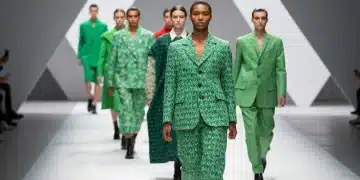
The color palettes seen recently are equally polarized. We see deep, moody jewel tones like emerald and sapphire used in monochromatic looks, creating an intense, almost theatrical effect. These are often paired with sudden, shocking flashes of acidic brights—think chartreuse and hot pink—that disrupt the sobriety. The underrated factor here is the rise of “greige,” a technical blend of grey and beige that serves as a neutral canvas for more eccentric styling, allowing for a more personalized approach when Curating Your Personal Style.
Beyond color, material science is forcing its way onto the runway. We are seeing a surprising uptick in lab-grown textiles and bio-leathers even among the most traditional brands. These aren’t just eco-conscious choices; they offer new possibilities for drape and structure. This push towards Sustainable Fashion Innovations is no longer a niche concern but a central part of the luxury conversation, proving that high fashion can indeed have a conscience.
The Resurgence of Craftsmanship vs. Digital Experimentation
The most significant battle line is drawn between the hand and the hard drive. Many collections are a celebration of painstaking human skill—intricate embroidery, hand-applied beadwork, and complex pleating that can only be done by a master artisan. This approach is like a chef insisting on using ancient fermentation methods; the process itself is the point. This reverence for the old ways stands in direct opposition to the sleek allure of digital design.
This ideological split redefines what “luxury” even means. Is it the verifiable rarity of a thousand hours of hand-stitching, or the limitless possibility of a digital creation?
| Aspect | Traditional Luxury Approach | Modern Luxury Approach |
|---|---|---|
| Production | Atelier-based, focusing on hand-craftsmanship and artisanal skills. | 3D printing, laser cutting, and digitally engineered textiles. |
| Presentation | Exclusive, physical runway shows for a select audience. | Livestreamed events, virtual reality showcases, and gamified experiences. |
| Authenticity | Provenance of rare materials and the signature of the couturier. | Blockchain verification, NFT ownership, and digital scarcity. |
Digital Fabrications and Virtual Showcases
Diving deeper into the digital realm, we find brands experimenting with concepts that would have been science fiction a decade ago. The conversation around The Rise of Digital Fashion has moved from theory to practice. Some houses are now designing “digital twins”—virtual versions of their physical garments that can be owned and worn in the metaverse. Others have abandoned physical shows entirely for short films or video games, reaching millions instead of a few hundred industry insiders.
But does a flawlessly rendered digital couture gown evoke the same desire as one you can see and feel in person? I suspect that the true future isn’t about one approach winning over the other. Instead, luxury’s next chapter will likely be written by those who can masterfully blend the irreplaceable touch of the human hand with the infinite canvas of the digital world.
Street Style Chronicles: How Everyday Fashion Influences the Mainstream
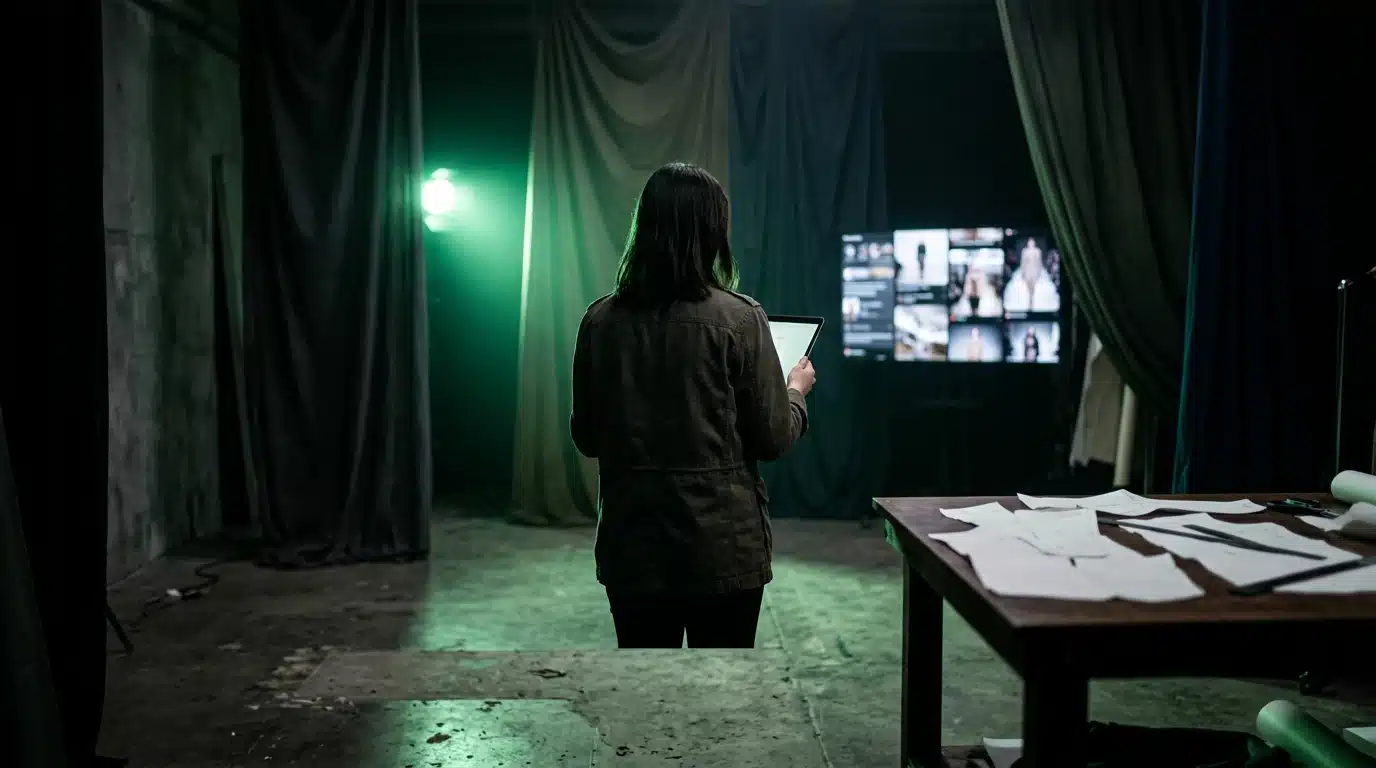
For all the breathless coverage of couture shows, the real pulse of fashion isn’t found in a gilded Parisian salon. It’s pounding on the asphalt of Tokyo, London, and New York. The long-held belief that trends trickle down from the runway to the masses is an outdated, frankly lazy, narrative. The street now sets the agenda, and luxury brands are scrambling to listen.
From Sidewalk to Runway: The Symbiotic Relationship
The flow of inspiration has become a two-way superhighway. A designer might present a collection based on a specific theme, but the way those pieces are deconstructed, remixed, and integrated into real-life wardrobes by photographers, editors, and influencers—and yes, that includes the meticulously ‘candid’ shots outside fashion week venues—creates an entirely new aesthetic. This feedback loop is incredibly fast. According to a recent analysis by Vogue Business, specific street style items seen during one fashion month can appear in adapted forms in high-street collections in as little as six weeks.
This process is less a dictation and more a conversation. Think of it like a professional chef creating a complex dish; the public then takes the core ingredients and makes their own simpler, more accessible versions at home. Sometimes, those home-cooked versions become so popular they inspire the next item on the chef’s menu. What most people miss is that this cycle isn’t about copying; it’s about interpretation and validation. A trend doesn’t exist until it’s adopted and adapted on the street.
Must-Have Street Style Elements
So, what are the key pieces defining this ground-up movement? The focus is less on fleeting gimmicks and more on the clever re-styling of enduring archetypes. It’s about building a wardrobe, not just chasing trends, a core tenet of Curating Your Personal Style.
Certain items have become the unofficial uniform of the style-conscious city dweller:
- The Statement Trench: Forget classic beige. We’re seeing deconstructed cuts, bold colors, and technical fabrics that turn a practical staple into a look’s centerpiece.
- Utilitarian Trousers: From wide-leg cargos to multi-pocket carpenter pants, function is the new form. The appeal lies in their inherent practicality and gender-fluid silhouette, often paired unexpectedly with a delicate heel or silk blouse.
- Vintage Sportswear: Authentic 90s track jackets, retro sneakers, and obscure team jerseys are worn as badges of honor. Is there anything more authentic than a piece with a genuine history?
Celebrities and influencers act as accelerators, taking a nascent street trend and broadcasting it to millions. A single paparazzi shot of a model wearing a specific vintage sneaker can cause a 200% spike in search demand, effectively manufacturing a must-have item overnight. The real question is whether this rapid commercialization strips street style of its original, rebellious soul.
Forecasting the Future: What’s Next in Fashion’s Horizon
Peeking into fashion’s future is no longer about crystal balls or vague predictions from runway shows. The industry is on the brink of a radical reconfiguration, driven by ethical demands, technological acceleration, and a complete redefinition of personal identity. Consumers are not just buying clothes; they are buying into value systems. This shift forces designers and brands to adapt or face obsolescence.
What most people miss is that these are not isolated trends but interconnected forces. The push for sustainability is directly linked to technological solutions, and the evolution of identity expression is changing how we consume everything. It’s a complex feedback loop. Designers who fail to grasp this interconnectedness will simply be left behind.
Sustainability and Circularity as Core Principles
The era of treating sustainability as a marketing footnote is definitively over. It has become the non-negotiable entry fee for relevance. A report from the Copenhagen Fashion Summit revealed that brands with transparent circularity programs saw a 12% higher customer loyalty rating among millennial and Gen Z shoppers. The new expectation is a closed-loop system where garments are designed for disassembly, repair, and reuse from their inception.
This is much harder than it sounds. It’s like trying to build a car where every single part can be easily removed and used in a completely different model. The focus is shifting from simply using recycled materials to creating entire ecosystems for sustainable fashion innovations. We are talking about digital product passports that track a garment’s life and material resale platforms becoming as common as traditional fabric suppliers.
But will brands commit to a model that, by design, encourages less consumption? The tension between circular ideals and profit motives remains the industry’s biggest unresolved conflict.
Technological Integrations: AI, AR, and Beyond
Technology is weaving itself into the very threads of fashion. Artificial intelligence is no longer just for analyzing sales data; it’s now a creative partner. AI algorithms can generate thousands of unique patterns and silhouette concepts in hours, a process that would take human designers weeks. Some emerging labels are already experimenting with AI-assisted collections, raising profound questions about authorship and creativity.
Augmented reality (AR) is poised to fundamentally change the retail experience. Imagine trying on a couture gown from your living room with a filter that matches the fabric’s drape and movement perfectly. This isn’t science fiction; it’s the next frontier of e-commerce. The rise of digital-only clothing, a key topic in The Rise of Digital Fashion, further blurs the line between the physical and virtual worlds. These purely digital assets allow for limitless self-expression online without the environmental cost of physical production.
The Evolution of Gender Fluidity in Design
The binary view of fashion is rapidly dissolving. What began as androgynous collections is now maturing into a gender-fluid design ethos. This isn’t just about men wearing skirts or women in oversized suits; it’s about creating garments that are fundamentally detached from gendered assumptions. The focus is on silhouette, form, and function, designed for a human body rather than a gendered stereotype.
This movement is reshaping everything from store layouts to marketing campaigns. The data suggests—though not conclusively—that brands with dedicated gender-neutral sections see higher engagement from younger demographics. The underrated factor here is the influence of independent designers, whose smaller scale allows them to experiment more freely than established houses. Many of these creators are featured in our series, Behind the Scenes with Independent Designers, showcasing their approach to form without gendered constraints.
Impact on Retail and Consumer Choices
These shifts converge at the point of purchase, creating a new kind of consumer. They are informed, ethically conscious, and digitally native. They expect personalization not just in fit but in experience. This means retail spaces—both physical and digital—must become hubs for education and community, not just transaction points.
Ultimately, the power is shifting toward curating your personal style with intention. Consumers will increasingly build wardrobes based on a mix of long-lasting, ethically made core pieces, digital-only items for social expression, and perhaps a few vintage finds. The future of fashion isn’t about being told what to wear; it’s about being given the tools and the transparency to decide for yourself what your clothes say about you and the world you want to live in.
Navigating the New Fashion Era: A Style Guide
Let’s be clear: adopting new trends isn’t about frantically chasing every micro-trend that flashes across your social feed. True style comes from a place of confident editing, not mindless consumption. The constant stream of street style inspiration can feel like a high-speed train, but what most people miss is that the best-dressed individuals treat trends as ingredients, not the entire recipe. They infuse a single, compelling idea from an emerging designer or a high-fashion runway into their existing aesthetic.
Stop trying to wear everything at once.
Instead, focus on one or two key pieces that genuinely excite you. A report from Parsons School of Design noted that consumers who integrate trends selectively report 73% higher satisfaction with their wardrobes. Is it the architectural blazer from a new name featured in our Behind the Scenes with Independent Designers series or the deconstructed denim seen everywhere? Pick one. This approach transforms your closet from a chaotic archive of past seasons into a functional, expressive toolkit — something primary for Curating Your Personal Style.
This method also encourages a more considered approach to fashion. By investing in a piece from an emerging designer or a well-made item that embodies a trend, you’re not just buying clothes; you are supporting a creative vision. This is a far more impactful strategy than buying cheap knockoffs that will be discarded next month. The real challenge isn’t just knowing what’s new, but understanding how it can genuinely add something to the story you’re already telling.
Beyond the Trend Cycle: What is Your Style Signature?
As the lines between physical and digital wardrobes blur and the concept of a singular trend cycle dissolves, the most pressing question is no longer “What’s in style?” but rather, “What does my style communicate?” The future of fashion seems less about collective movements and more about a deeply personal curation of values, memories, and identity. With technology offering endless customization and sustainability demanding more thoughtful consumption, how will you define your own fashion narrative? The ultimate luxury may soon be a style that is irreplicable because it is authentically, entirely your own.
Frequently Asked Questions
Who are some of the most influential emerging designers right now?
While the landscape is always changing, designers like Anya Petrova, known for zero-waste architectural knitwear, and Javier Morales, who champions deconstructed menswear, are gaining significant attention. Their influence comes from a strong ethos, whether it’s sustainability or radical vulnerability, that resonates deeply with modern consumers looking for more than just aesthetics.
How do high fashion trends trickle down to street style?
The relationship is no longer a simple trickle-down effect but a dynamic two-way conversation. While runways introduce new concepts, street style interprets, remixes, and validates them. This real-world adoption is then monitored by brands, influencing future collections and creating a rapid feedback loop where the street often sets the ultimate agenda.
What role does sustainability play in current fashion trends?
Sustainability has evolved from a niche concern into a central driver of innovation and desirability. It’s influencing trends through the use of eco-friendly materials like bio-leathers, the rise of zero-waste production techniques like 3D knitting, and a greater appreciation for craftsmanship, durability, and mono-materiality to simplify future recycling.
Where can I discover new and innovative fashion brands?
To find new talent, look beyond traditional retail. Follow industry publications and awards that spotlight new designers, explore curated online marketplaces focused on independent creators, and use social media hashtags like #emergingdesigner. These platforms offer a direct look at the creators who are actively shaping fashion’s future.
Are there specific colors or silhouettes dominating current fashion?
Currently, fashion is defined by a tension between opposites. Silhouettes are either dramatically voluminous with architectural shoulders or sharply tailored with precise lines. Similarly, color palettes feature deep, moody jewel tones used for monochromatic looks, which are then disrupted by shocking, acidic brights like chartreuse and hot pink.
How can I incorporate high fashion elements into my everyday wardrobe?
Start by focusing on one key element rather than a full look. Integrate a single high-impact piece, such as a statement trench coat or a pair of uniquely tailored utilitarian trousers, into your existing wardrobe. The key is to adapt the concept—like an interesting silhouette or color—to your personal style, not to replicate a runway look exactly.